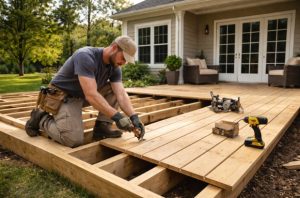
Planning a deck installation? A well-built deck should feel solid, safe, and ready for everyday use. It should be a place where you can relax, host guests, and enjoy your outdoor space without worrying about loose boards or structural issues. However, many homeowners run into problems when poor planning, low-quality materials, or improper installation lead to early damage and costly repairs.
A strong and long-lasting deck does not happen by chance. It requires careful planning, the right materials, and proper building techniques from the start. When every step is handled correctly, your deck becomes a dependable extension of your home, adding both function and value.
At Quality Deck Builders in Fleming, GA, experience in deck construction shows that small decisions during installation make a big difference over time. This guide shares practical tips to help you build a deck that stays strong, safe, and visually appealing for years.
Plan Your Deck Installation with a Clear Goal
Every successful deck installation begins with a clear plan. Without proper planning, it is easy to overlook important details that affect both function and durability.
Start by defining how you want to use your deck:
- Will it be used for entertaining guests?
- Do you need space for outdoor dining?
- Are you creating a quiet area to relax?
Once you know how the space will be used, you can plan the layout more effectively.
Other important planning factors include:
- Deck size and shape
- Entry points from your home
- Sunlight and shade throughout the day
- Privacy from neighbors
- Local building codes and permit requirements
A well-planned deck installation helps avoid delays, reduces unexpected costs, and ensures your outdoor space fits your lifestyle.
Choose Durable Materials for Long-Term Performance
The materials you choose will directly impact how long your deck lasts. While some materials may look appealing at first, they may not hold up well under constant exposure to weather.
Common decking materials include:
- Pressure-treated wood – Affordable and widely used, but requires regular maintenance
- Composite decking – Low maintenance and resistant to moisture and fading
- Hardwood decking – Strong, durable, and visually appealing
- PVC decking – Highly resistant to moisture and insects
When selecting materials, consider:
- Durability in outdoor conditions
- Maintenance requirements
- Resistance to moisture, heat, and sun exposure
- Overall appearance and style
Investing in high-quality materials helps prevent premature wear and reduce long-term maintenance costs.
Build a Strong Foundation and Framing System
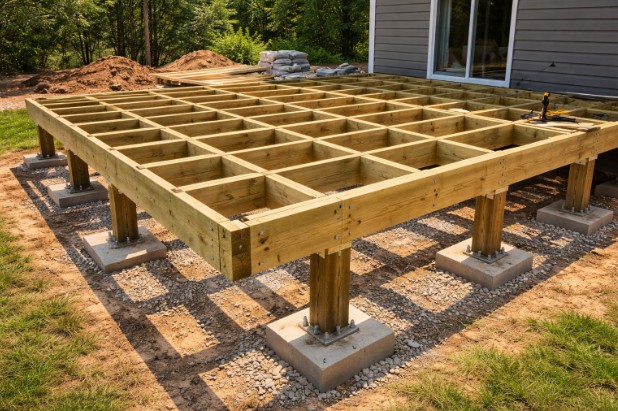
The strength of your deck depends on its foundation. Even high-quality decking boards will fail if the structure underneath is weak.
A strong deck foundation includes:
- Deep, properly installed footings
- Solid support posts
- Secure beams and joists
- Correct spacing between structural components
Important framing tips:
- Use corrosion-resistant fasteners
- Keep all framing levels aligned
- Follow load-bearing guidelines
A properly built frame ensures your deck remains stable, safe, and able to handle daily use.
Ensure Proper Drainage and Water Management
Water is one of the biggest threats to any deck. Without proper drainage, moisture can lead to rot, mold, and structural damage.
To protect your deck:
- Leave spacing between boards to allow water runoff
- Prevent water from pooling near the foundation
- Install flashing where the deck connects to your home
- Ensure the ground slopes away from the structure
Proper drainage helps extend the life of your deck and keeps it structurally sound.
Use High-Quality Fasteners and Hardware
Fasteners and hardware are small components that play a big role in keeping your deck secure. Poor-quality materials can rust, loosen, or fail over time.
Best practices include:
- Use galvanized or stainless steel fasteners
- Choose screws instead of nails for better hold
- Ensure all connections are tight and secure
Quality hardware helps maintain the strength and safety of your deck.
Install Railings and Stairs for Safety
Safety should always be a priority in any deck installation. Railings and stairs must be built correctly to prevent accidents and ensure stability.
Key safety features include:
- Proper railing height
- Secure balusters
- Even stair spacing
- Strong handrails
A safe deck allows homeowners and guests to enjoy the space without concern.
Apply Protective Finishes for Long-Term Use
Outdoor decks are exposed to sun, rain, and humidity every day. Without protection, materials can fade, crack, or weaken over time.
Protective finishes include:
- Staining to enhance and protect wood
- Sealing to prevent moisture damage
- Painting for added durability and appearance
Benefits of finishing:
- Extends the life of your deck
- Protects against weather damage
- Maintains a clean and polished look
Routine maintenance helps preserve both the appearance and strength of your deck.
Follow a Step-by-Step Deck Installation Process
A structured process ensures each part of the deck is built correctly. Skipping steps or rushing construction can lead to long-term issues.
A reliable installation process includes:
- Planning and design
- Site preparation
- Foundation and framing
- Deck board installation
- Railings and finishing touches
- Final inspection
Following a clear process helps ensure consistency, quality, and durability.
Avoid Common Deck Installation Mistakes
Many deck problems come from mistakes that could have been avoided during installation.
Common mistakes include:
- Poor drainage planning
- Incorrect spacing between boards
- Weak or uneven framing
- Using low-quality materials
- Skipping protective finishes
Avoiding these issues helps create a deck that remains strong and reliable over time.
Work with an Experienced Deck Builder
Working with a professional deck builder can significantly improve the quality and longevity of your deck. Experienced contractors understand the details that go into proper construction.
Benefits of hiring a professional include:
- Accurate planning and design
- Proper installation techniques
- Compliance with building codes
- Efficient project completion
- Long-lasting results
An experienced builder helps prevent costly mistakes and ensures your deck is built correctly from the start.
If you want more helpful tips and ideas for outdoor projects, read our blog for additional insights. You can also check out our services to see how we help homeowners build and maintain strong, long-lasting decks and fences.
Deck Installation FAQs
How long does deck installation take?
Most deck installations take a few days to a couple of weeks, depending on size and complexity.
What material is best for a long-lasting deck?
Composite and PVC decking offer excellent durability and low maintenance, while wood remains a strong option with proper care.
How often should a deck be maintained?
Wood decks typically require sealing every 1–2 years. Composite decks require less maintenance.
Do I need a permit for deck installation?
Yes, most areas require permits. A professional contractor can help handle this process.
Build a Deck That Lasts for Years
A strong deck starts with proper planning, quality materials, and careful construction. Each step plays a role in creating a safe and dependable outdoor space that homeowners can enjoy for years.
Start Your Deck Installation with Confidence
Planning your deck installation properly makes all the difference. Quality Deck Builders in Fleming, GA, provides expert deck construction designed for strength, durability, and long-term performance.Contact us today to request your free estimate and take the first step toward building a deck you can enjoy for years to come.